A Rainy-Day Neighbourhood Outing Built Around One Stop
Plan a rainy-day neighbourhood outing around one indoor stop, with simple fallback choices that keep the rest of the afternoon relaxed and local.
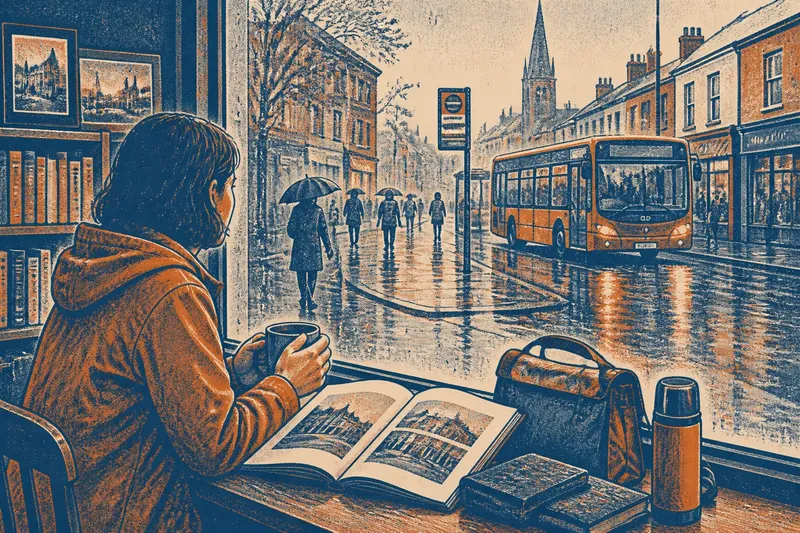
A bus sighs at the kerb while rain threads down the library windows; you have an hour or two, a coat, and no appetite for a grand expedition. A rainy-day neighbourhood outing works best when one indoor destination gives the trip a centre, while the time around it stays loose enough for the weather to have its say.
Why does a simple outing turn into a complicated plan?
The usual culprit is trying to solve the whole afternoon before leaving home. A café, a gallery, a covered market and a scenic detour can sound like a satisfying itinerary, but each extra stop adds another decision about opening hours, distance, queues and wet shoes.
Choose one indoor anchor that gives you a reason to go out: a public library, a small local museum, a community hall with a free exhibition, or a covered market you can browse without buying anything. Treat it as the only promised destination. Everything else is an option, not a commitment.
Say you live near a library with a display of local photographs. You decide to visit that display, then leave the next stretch open; if the rain eases, you can take the longer way home, and if it thickens, you can head straight back. The outing still has a shape without needing a timetable.
What if the indoor stop is shut or unsuitable?
A door sign can undo a plan built around one place, especially on a public holiday or during a community event. Check the destination’s current opening information before setting out, and notice whether the room or display you want to see is accessible to visitors that day.
Pick a nearby fallback before you go, but keep it in reserve rather than turning it into a second scheduled stop. A library foyer, a covered arcade or a public indoor passage may offer a brief pause, while another free indoor venue could serve as a proper substitute. The right alternative depends on what is open locally.
Keep the fallback close enough that it does not become a separate expedition. If no suitable indoor place is available, shorten the outing or save it for another day; there is little pleasure in trudging between closed doors just to honour a plan.
How can you keep the route comfortable in the rain?
Rain changes the feel of familiar streets. A route that looks short on a map may include an exposed crossing, a slippery slope or a stretch with nowhere to shelter. Choose streets you already know, favour pavements with shopfronts or awnings, and use a local map to spot the simplest way to the anchor.
Think about what you will carry as well as where you will walk. A hood or umbrella, a bag that closes, and a small cloth for damp glasses or a wet seat can make a short trip easier. Wear footwear suited to the pavement; a puddle is less charming when it seeps through a thin sole.
It is not worth chasing a perfect weather window or packing for every possible mishap. A modest outing needs only enough preparation to keep the journey comfortable, not a full expedition kit.
What should you do if the rain changes halfway through?
Let the weather decide the length of the open-ended part, rather than treating it as a problem to defeat. After the indoor visit, pause somewhere sheltered and check the conditions: a covered bench, a library entrance or a market arcade can provide a natural moment to choose.
If the rain softens, take a short loop through a familiar street or square. If it turns heavy, use the direct route home. You can also wait a little under cover if that suits your schedule, but avoid lingering somewhere that expects customers to buy something just to occupy a seat.
This is where leaving time unassigned helps. There is no missed booking and no pressure to reach a second destination before it closes; the outing can simply end when the weather or your energy says it has had enough.
Which small questions are worth settling before you leave?
How do I choose an indoor anchor?
Pick a place with a clear reason to visit and a straightforward way to spend a little time there, such as browsing a library display or looking around a free gallery. A nearby destination you already understand is often easier than an unfamiliar venue with complicated access.
Should I plan a café stop?
Only if you want one and can comfortably cover the cost; it need not be the price of admission to having an outing. A flask or snack from home can make the trip feel complete without relying on a purchase, while a café remains an optional warm-up.
What if I am going with someone who walks at a different pace?
Agree on the indoor destination and a comfortable way to get there, then leave the optional stretch genuinely optional. A shorter return route or a sheltered place to pause can make the outing easier to share without making anyone explain why they want to head back.
How do I keep the trip low-cost?
Choose an anchor with free entry, check whether any part of the visit requires a booking or payment, and make the walk itself the open part of the outing. Bringing a drink from home and avoiding extra transport can help, but there is no need to turn every small expense into a project.
How do you leave the afternoon open without feeling aimless?
Give the outing a simple boundary: one indoor place to visit, one familiar route there, and permission to choose the return route later. That is enough structure to get out of the door while preserving the pleasure of noticing a new shop window, a sheltered courtyard or a quiet side street along the way.
For a rainy-day neighbourhood outing, the most useful plan is not a packed itinerary but a dependable centre and an easy exit. Check the anchor’s opening information, carry what the weather calls for, and let the walk beyond the door remain a small choice rather than another obligation.