The More Supplies, the More Fun Myth
The more supplies, the more fun myth can crowd out the pastime itself. Use a small, defined kit to keep attention on making, playing or exploring.
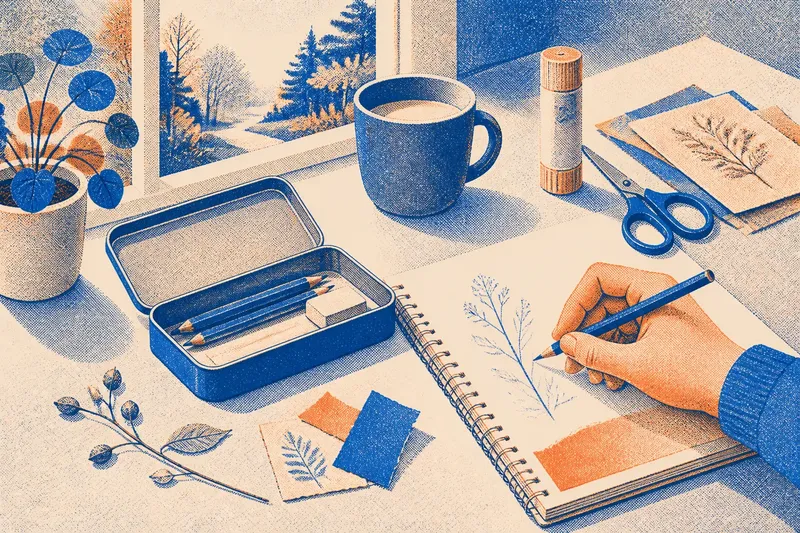
You clear the kitchen table for an evening of sketching, then spend half of it sorting pencils, hunting for a sharpener and deciding which paper to use. The more supplies, the more fun myth makes it easy to mistake preparation for the pastime. A deliberately small kit can leave more room for the satisfying part: drawing, experimenting, playing or simply noticing what is around you.
Why can extra supplies get in the way?
Every additional item brings a small decision: use it now, save it for later, or find somewhere to put it. A few choices can be part of the pleasure, but a growing pile can turn a relaxed activity into a series of errands and comparisons.
There is also a difference between having options and being able to use them. Special tools may have different care needs, missing parts or instructions to remember. When the set-up becomes the main event, attention drifts from the pastime you meant to enjoy.
This is not an argument for owning as little as possible. The useful question is whether each item earns its place in the activity you actually do. A sturdy pair of scissors may matter for paper crafts; a collection of decorative punches might not, if they rarely leave the drawer.
What does a useful constraint look like?
A constraint is a clear boundary chosen before you begin. It might be one surface, a handful of materials, a short session, or a rule that every item must fit in a particular tin. The aim is not to make the pastime harder. It is to settle routine decisions so your attention can stay with the activity.
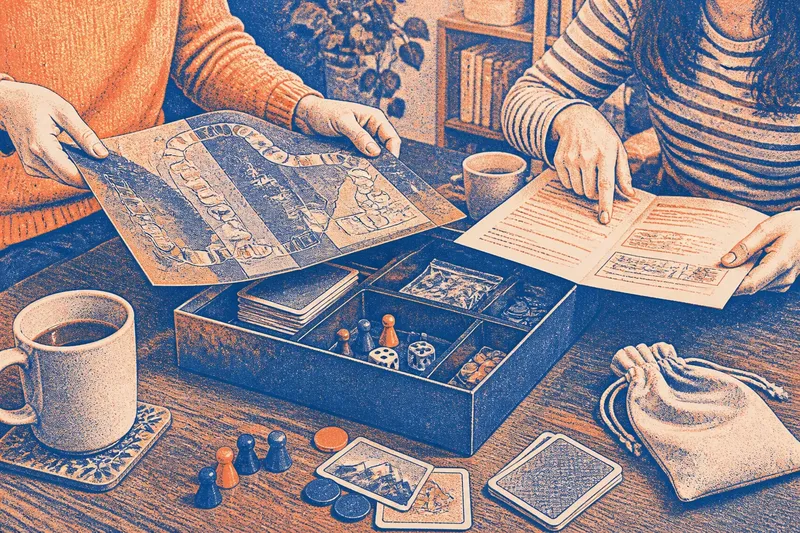
Choose a boundary that makes sense for the pastime, not one that sounds impressively strict. For a nature journal, you might take a notebook and one pencil; for a card game, use the deck and any counters already to hand. The best constraint feels like a helpful invitation, not a test of endurance.
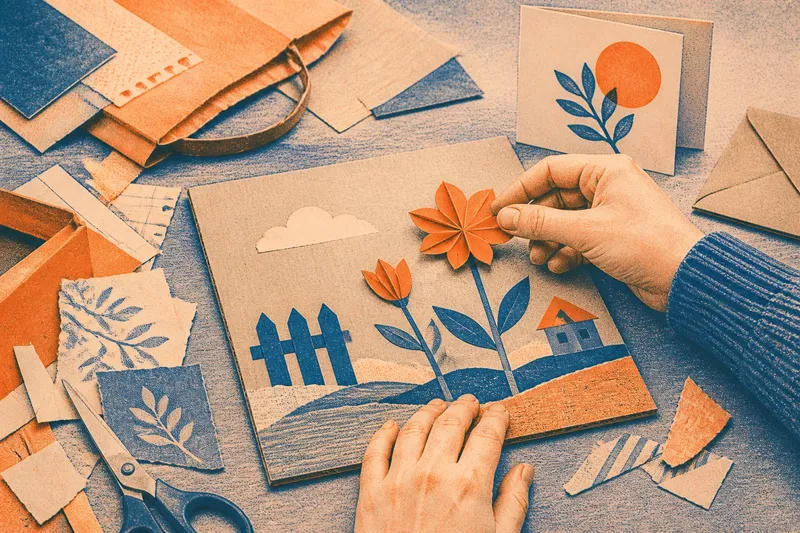
Say you want to make a small collage but have a shelf crowded with paper scraps, glue sticks, pens and embellishments. You decide to work with one sheet of card, a few scraps already on the table and a glue stick. You can begin without searching through the shelf, and the finished piece gives you a clear view of what those materials can do together.
How do you choose what belongs in the kit?
Start with the action you want to take, then name the tools that directly support it. Separate essentials from attractive extras: essentials make the activity possible, while extras offer variations you may or may not enjoy.
- Name the activity. “Make a quick sketch” is easier to plan for than “do something creative”.
- Pick the starting materials. Choose what is already accessible and suitable for the task.
- Set a container or surface limit. A small box or one clear patch of table makes the boundary visible.
- Leave out duplicate options. If two tools serve the same purpose, begin with the simpler one.
- Make an exception for comfort or access. A lamp, magnifier or adapted tool may be what lets you take part.
- Review after the activity. Keep track of anything you genuinely needed, rather than anything you merely considered using.
That last distinction is useful. An item that solves a recurring snag may deserve a place in the kit; one that only promises an imagined future project can stay put until that project comes along.
What if the activity needs variety?
Some pastimes thrive on changing materials, and a narrow kit can become dull if it never changes. Instead of bringing everything at once, rotate a small selection between sessions. A different pencil, a new walking route or a borrowed game can refresh the experience without making every outing or evening feel like a packing job.
Shared supplies can also offer variety without requiring each person to own a full set. A household might keep a common box of playing cards and a few pencils, while friends bring one favourite item when they meet. Agree in advance who will bring what, so sharing reduces duplication rather than creating another pile of things to organise.
There is no need to chase the ideal container, buy matching organisers or label every ordinary object. If a shoebox already holds the useful materials and is easy to put away, upgrading the storage is probably not worth the effort.
How small should a pastime kit be?
Should I use only one tool?
Only if that suits the activity. A single tool can make a satisfying prompt, but some pastimes naturally need a few complementary items; choose the smallest set that lets you begin comfortably.
What if I keep wishing I had another supply?
Notice whether the missing item would solve a real obstacle or simply add another option. If the same practical need returns, adjust the kit for next time rather than interrupting every session to shop.
Can a small kit work for a group?
Yes, if everyone can reach the shared materials and the rules of use are clear. For a craft afternoon, for instance, a shared box of pencils and scissors can support several people, while each person chooses a surface to work on.
When should I stop limiting the supplies?
Loosen the boundary when it blocks the activity, excludes someone or makes the session less comfortable. A constraint is a planning aid, not a virtue in itself.
How can you tell whether the boundary helped?
Look at what happened during the pastime, not whether the kit was perfectly tidy. Did you begin without a long search? Did you spend more time doing the activity than arranging materials? Was anything genuinely missing, and did that absence stop you or merely change the result?
Use those observations to adjust the next session. Add a needed tool, swap out something untouched, or keep the same boundary if it made starting feel easier. The goal is a kit that supports the pastime without demanding attention of its own.
The more supplies, the more fun myth loses its hold when you judge materials by what they help you do, rather than by how much choice they promise. A modest kit can make free time feel more available: less to gather, less to put away, and more attention left for the pastime itself.